
Uncategorized
Decorative Roman Blinds Style Your Windows with Soft Tailored Fabric
26
Oct
Oct
Decorative Roman blinds turn a plain window into a feature of the room. Soft, textured fabrics, a tailored drape and a touch of pattern give you the warmth of a curtain with the clean lines of a blind. In this guide we look at what makes a Roman blind decorative, where it works best and how to choose one, and we finish with the classic Roman blind, the crisp, structured option that never goes out of style.
- Decorative Roman blinds use soft, supple fabric that folds into gentle, tailored pleats.
- The strings sit behind the fabric, so the front stays clean and uninterrupted.
- Choose from Tabi Linen, Bull Denim, Ticking Stripe, Hemingway and Carnaby fabrics.
- Add blockout lining for bedrooms, nurseries and TV rooms.
- Prefer a crisp, formal finish? The classic Roman blind is a timeless alternative.
What Are Decorative Roman Blinds?
Decorative Roman blinds (also known as Roman shades) are made from soft, supple fabric that falls into relaxed, tailored folds. The fabric is the star, so the range leans on texture and pattern rather than a plain, firm finish. At Blinds Direct, the decorative range is made to measure to suit your window.
The strings that raise the blind sit behind the fabric, which keeps the front of the blind clean and uninterrupted. That is a big part of the polished, designer look.
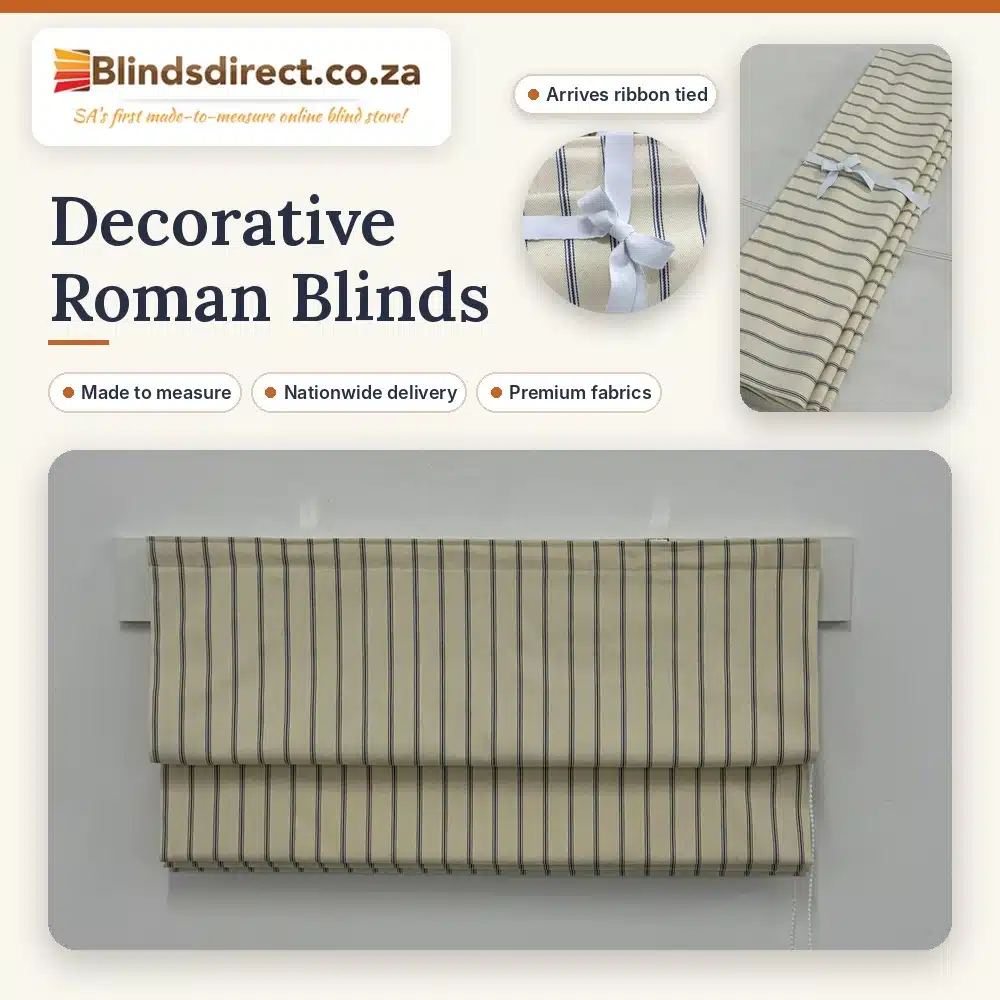
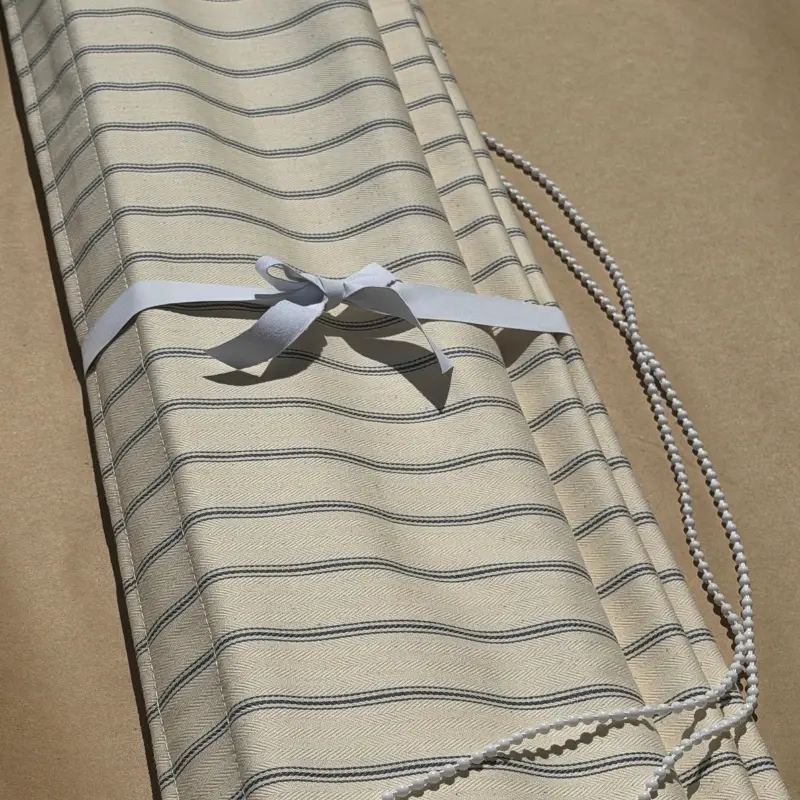
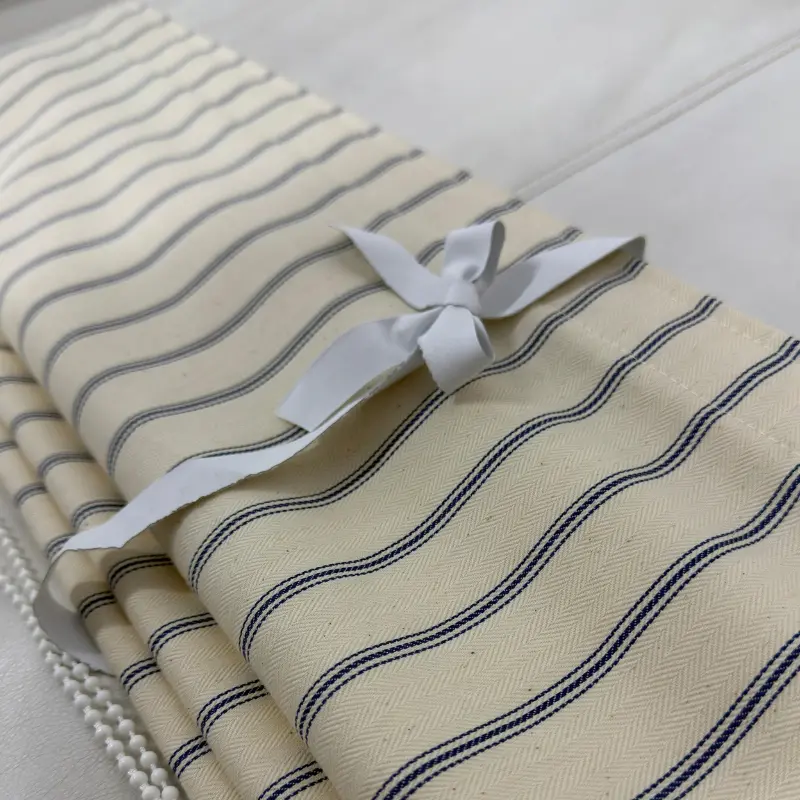
Your decorative Roman blind also arrives with a thoughtful finishing touch: it comes neatly folded and tied with a ribbon bow, ready to unwrap and hang.
Fabrics for Decorative Roman Blinds
Each fabric gives the blind its own personality:
- Tabi Linen: a polyester-linen blend with a natural, woven look.
- Bull Denim: 100% cotton, with a relaxed, casual feel.
- Ticking Stripe: 100% cotton, a classic stripe that suits both traditional and modern rooms.
- Hemingway and Carnaby: polyester fabrics with a refined, tailored character.
Where Decorative Roman Blinds Work Best
Each room suits a slightly different look:
- Living Room: A linen-look blind in a neutral tone adds texture without competing with your furniture. Fitted outside the frame, it can make a window look taller and grander.
- Bedroom: Choose a patterned or striped fabric and add blockout lining. You get the style you want and a dark room for sleeping in.
- Nursery: Soft, light colours with blockout lining help little ones nap during the day, and a cord and cleat or chain keeps the controls tidy.
- Kitchen and Dining Area: A Ticking Stripe or denim blind brings a cosy, country feel. Because the blind raises neatly to the top of the window, it stays clear of the sink and counters.
- Home Office or TV Room: Blockout lining cuts glare on screens, while the fabric keeps the room feeling warm and finished.
How to Choose Your Decorative Roman Blind
- Pick the fabric first. Stripes and denim feel casual, while linen and refined weaves feel calm and elegant.
- Choose your lining. Poly cotton is soft and light-filtering. Blockout is best for bedrooms, nurseries and TV rooms.
- Decide on the fit. A recess fit sits inside the window frame for a neat, built-in look. A facefix fit sits outside the frame and covers more of the wall.
- Select the operation. Cord and cleat is simple and classic. A chain-operated headrail, in plastic or metal, gives smooth, controlled lifting.
- Measure carefully. Enter the width and drop in millimetres. For a recess fit, the factory deducts 10mm from the width and you need a 35mm recess at the top. For a facefix, no deductions are made, so the exact size is manufactured.
Care and Maintenance
Dust or vacuum your blind gently and spot clean with a damp cloth and mild soap. Machine washing is not recommended for the finished blind, so check the care label for your chosen fabric.
Classic Roman Blinds: A Timeless Alternative
If you prefer a crisp, structured finish, the classic Roman blind is hard to beat. It uses a firmer fabric that holds sharp, flat folds, and the string controls sit in front of the fabric for a traditional, tailored look.
Classic Roman Blind Fabrics
- Manhattan: semi-translucent, for soft natural light.
- Linen: blockout, ideal for bedrooms.
- Riviera: semi-blockout, a balance of privacy and light (some colours may be out of stock).
- Premier Weave: translucent, for bright, airy rooms.
Classic or Decorative?
Choose classic if you want clean, formal lines or a blind that suits offices, studies and traditional homes. Choose decorative when you want softer folds, pattern and texture. Both are made to measure with the same lining, fitting and operation options, and both come with a 2-year factory warranty and nationwide delivery.
Ready to Buy Decorative Roman Blinds?
Whether you fall for the soft texture of our decorative Roman blinds or the crisp lines of a classic, Blinds Direct makes it to measure and delivers nationwide. Explore our Roman blinds and shades and contact us if you need help measuring. We will assist you.
Frequently Asked Questions
What is the difference between decorative and classic Roman blinds?
Decorative Roman blinds use soft, supple fabric with a relaxed drape, and the strings sit behind the fabric. Classic Roman blinds use firmer fabric for crisp, flat folds, and the strings sit in front of the fabric.
Can I get blockout lining on a decorative Roman blind?
Yes. You can choose poly cotton lining, which is soft and light-filtering, or blockout lining, which is ideal for bedrooms, nurseries and TV rooms.
Should I choose a recess fit or a facefix fit?
A recess fit sits inside the window frame for a neat, built-in look and needs a 35mm top recess. A facefix fit sits outside the frame, which can make the window look larger and works when you do not have enough recess depth.
How long does it take to make a Roman blind?
Decorative Roman blinds take about 2 weeks to make, or up to 3 weeks from September to December. Classic Roman blinds take 15 to 21 days. We deliver nationwide by courier.
How do I clean a Roman blind?
Dust or vacuum gently and spot clean with a damp cloth and mild soap. Machine washing is not recommended for the finished blind. Follow the care label for your fabric.
